

New UPWEARS review explores the future of Europe’s natural fibres
A comprehensive scientific review reveals how climate change could reshape the production, quality and availability of flax and hemp fibres, and why preparing today is essential for tomorrow’s sustainable textile industry.
As Europe accelerates its transition towards bio-based materials, flax and hemp have become strategic resources for textiles, composites and sustainable construction. Renewable, recyclable and capable of storing carbon during growth, these natural fibres are increasingly seen as key alternatives to fossil-based materials.
But there is one major challenge that cannot be ignored:
What happens if climate change itself threatens the fibres that are supposed to support the green transition?
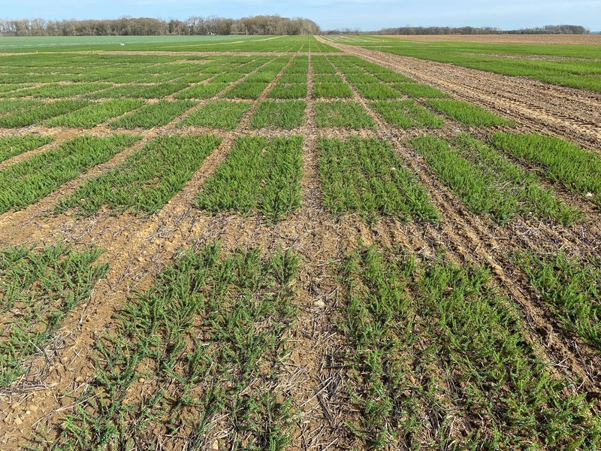
A new scientific publication bringing together researchers from INRAE, Hochschule Bremen – City University of Applied Sciences, Fibres Recherche Développement (FRD-CODEM), Université de Lille, the University of Cambridge, Università Cattolica del Sacro Cuore, Université de Toulouse (LGP), Université Marie et Louis Pasteur (FEMTO-ST) and Université Bretagne Sud has been published in Industrial Crops & Products. The review, entitled “Projected impacts of global warming on the production and qualities of hemp and flax plants and fibres: Toward adaptation strategies”, explores how global warming could affect the future of Europe’s natural fibres while identifying practical solutions to build more resilient value chains.
Natural fibres depend on nature
Unlike synthetic fibres manufactured in controlled industrial environments, flax and hemp are living crops whose development depends entirely on weather conditions.
Rainfall, temperature, sunshine and humidity all influence how plants grow, how fibres develop inside the stem, and even how fibres are extracted after harvest.
As climate change brings more frequent droughts, heatwaves, heavy rainfall and unpredictable growing seasons, these environmental changes could affect not only how much fibre is produced, but also how well those fibres perform.
For industries relying on natural fibres, understanding these future impacts is becoming just as important as developing new sustainable materials.
Looking beyond crop yields
Most studies investigating climate change focus on agricultural yields, how many tonnes of crops can be harvested each year.
This review goes much further.
For flax and hemp, fibre quality is just as important as production volume. Mechanical performance, fibre fineness, consistency and processability determine whether fibres can be transformed into high-performance textiles, composites or construction materials.
To better understand these challenges, the researchers analysed scientific knowledge from agronomy, plant biology, materials science, climate science and industrial processing.
Rather than studying a single experiment, the publication brings together decades of research to examine how climate change could influence the entire value chain—from crop growth and fibre development to harvesting, retting, industrial processing and final applications. It also explores future adaptation strategies, including new crop varieties, improved farming practices and the growing role of artificial intelligence in supporting decision-making.
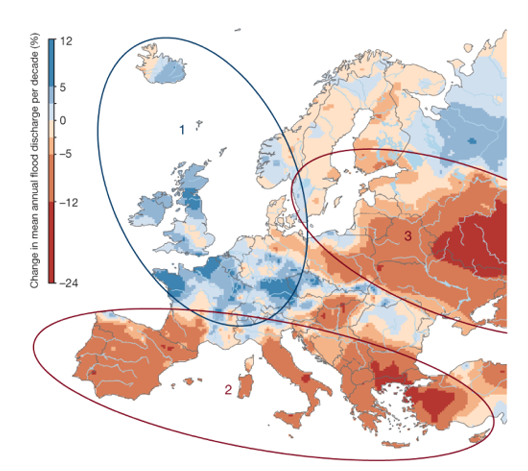
Blöschl, G., Hall, J., Viglione, A. et al. Changing climate both increases and decreases European river floods. Nature 573, 108–111 (2019). https://doi.org/10.1038/s41586-019-1495-6
Climate change is already affecting fibre production
One of the key messages of the review is that climate change is no longer a distant concern.
Recent growing seasons have already demonstrated how extreme weather can disrupt flax production across Europe. Adverse climatic conditions have reduced harvests, affected fibre quality and increased market uncertainty.
The consequences extend well beyond the farm.
Shorter plants, inconsistent fibre development or poorly retted straw can make fibres more difficult to process, creating challenges for textile manufacturers and other industries that depend on reliable raw materials. In recent years, lower production volumes have also contributed to significant increases in flax fibre prices, illustrating how climate variability can affect the entire value chain.
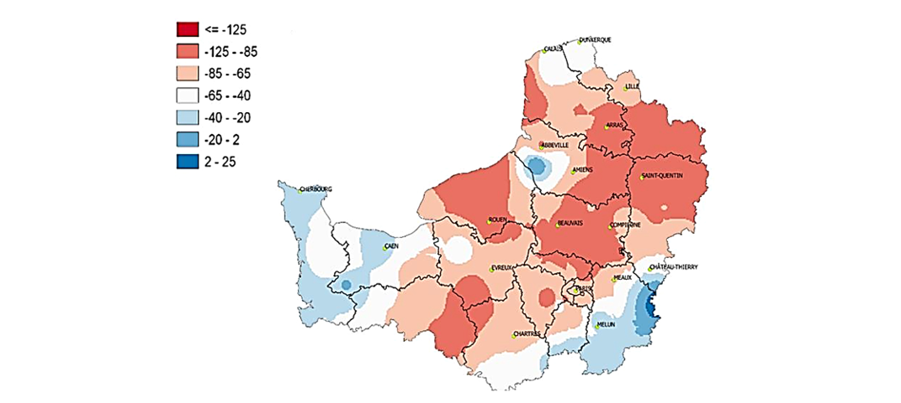
Bregeon, P., I. Chaillet, B. Normand, C. Torrecillas and N. Verjux (2020). Choisir & Decider – Lin fibre: Resultats et preconisations. Synthese nationale 2020. Paris, ARVALIS – Institut du vegetal.
More than yields: fibre quality is also at risk
Climate stress does not simply reduce plant growth.
Heat and drought can alter how fibres develop inside the stem, influencing characteristics that are essential for industrial applications, including:
- fibre length;
- cell wall organisation;
- mechanical performance;
- suitability for textile processing.
Another particularly vulnerable stage is field retting, the natural process used to separate fibres from the stem after harvest.
Because retting depends on rainfall, humidity and temperature, increasingly unpredictable weather could make it much more difficult to obtain fibres with consistent quality from one season to the next.
For industries requiring stable raw materials, maintaining fibre quality may become just as challenging as maintaining production volumes.
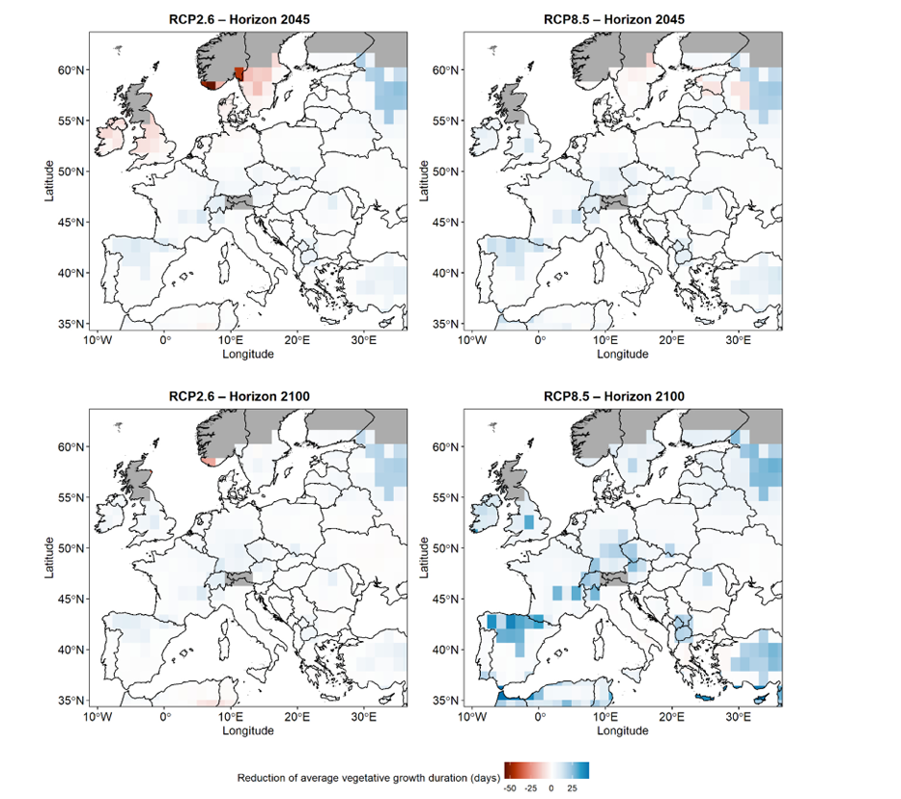
A blue colour indicates an expected reduction of vegetative growth duration under climate change when compared to the reference scenario. In contrast, an orange-red colour indicates an expected increment of vegetative growth duration. In the grey areas, no combination of cultivar × sowing date matched the two requirements of sowing in a soil of at least 4 ◦ C and of a full-flowering occurring before the 15th of September, in the frame of the reference scenario; these areas are therefore considered unsuited for hemp cultivation in the conditions under which the model was run. The computation of the vegetative’s growth modification was realised for each location and each scenario of climate change by subtracting the 10-year average duration of vegetative growth under the reference scenario from that under climate change scenario.
Can agriculture adapt?
Rather than presenting climate change as an unavoidable threat, the review highlights a wide range of solutions that could help farmers and industries adapt.
Among the most promising approaches are:
- developing more climate-resilient flax and hemp varieties;
- adapting sowing calendars to changing weather conditions;
- improving crop management practices;
- optimising harvesting and retting strategies;
- exploring new cultivation areas better suited to future climates.
Researchers also point to the growing potential of artificial intelligence.
By combining weather forecasts, field observations and crop models, AI could help predict crop performance, optimise harvesting periods or even identify the best varieties for future climate conditions. While these tools are still under development, they could become valuable decision-support systems for farmers and the fibre industry.
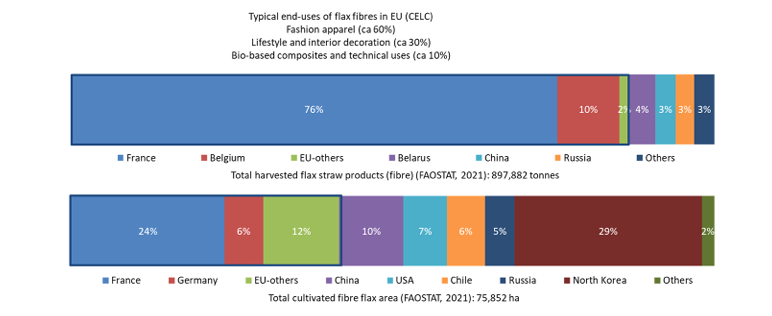
Data for the year 2021 from FAOStat, 2024. Note that, as per the FAOStat database, some numbers are estimated or imputed, rather than official figures. The relative applications in various end-uses are from CELC (2024); these are educated estimates
Why this matters for UPWEARS
One of UPWEARS’ ambitions is to develop the next generation of sustainable bio-based textiles.
Achieving this objective requires more than improving fibre processing technologies. It also depends on ensuring that future flax and hemp production remains reliable despite increasingly challenging climatic conditions.
Whether developing greener processing methods, improving fibre characterisation, enhancing textile performance or assessing environmental sustainability, all these innovations rely on one essential foundation: high-quality natural fibres that remain available in the years to come.
By bringing together expertise from agronomy, materials science, climate modelling and industrial processing, this publication provides valuable guidance for researchers, manufacturers and policymakers working towards more resilient European bio-based value chains.
Ultimately, understanding how climate change will affect flax and hemp today is a crucial step towards ensuring that these natural fibres can continue supporting the transition to a more sustainable textile industry tomorrow.
Key takeaways
- Climate change could affect both the quantity and quality of flax and hemp fibres.
- Harvesting and field retting are among the most climate-sensitive stages of fibre production.
- Artificial intelligence could become a powerful tool to help farmers anticipate climate risks and optimise crop management.
- Building resilient flax and hemp value chains is essential to secure the future of sustainable bio-based textiles in Europe.
Publication details
Title: Projected impacts of global warming on the production and qualities of hemp and flax plants and fibres: Toward adaptation strategies
Journal: Industrial Crops & Products
Authors: Johnny Beaugrand, Henri Blandinières, Alain Bourmaud, Jörg Müssig, Pierre Ouagne, Arnaud Day, Darshil U. Shah, Sofiane Guessasma, Stefano Amaducci, Vincent Placet and Christophe Baley.